Swarm Cluster Holds Joint Workshop on Decentralised Intelligence — P2CODE Demonstrates Secure, AI-Driven Orchestration Across Sectors
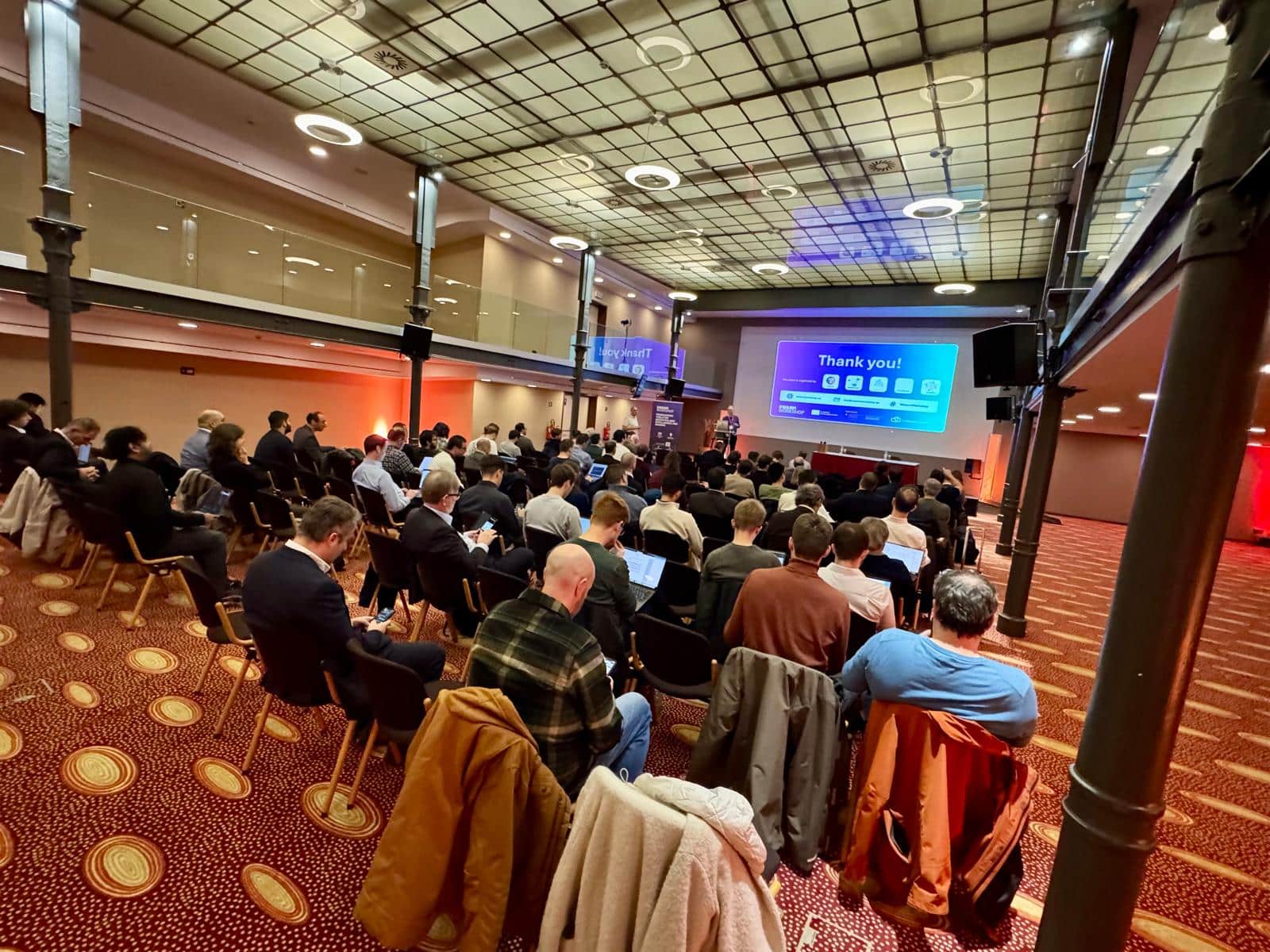
Brussels, 26–27 November 2025 — The Swarm Workshop 2025: Programming Tools for Decentralised Intelligence and Swarms convened more than 120 researchers, engineers, and innovators from across Europe at the Bedford Hotel to explore the accomplishments of five Horizon Europe projects that have developed impactful research and technological applications for decentralised intelligence. Over two days of keynotes, technical sessions, and hands-on demonstrations, participants saw how swarm-based architectures are becoming essential building blocks for distributed AI, adaptive cyber-physical systems, and next-generation digital infrastructure. Among the five organising projects under the HORIZON-CL4-2022-DATA-01-03 research cluster (topic swarm computing) — P2CODE, OASEES, OpenSwarm, SmartEdge, and TaRDIS — P2CODE demonstrated its vision and achievements to secure multi-agent orchestration and three impactful demos spanning industrial safety, emergency response, and critical infrastructure monitoring.
Keynotes: A Vision for Distributed Intelligence
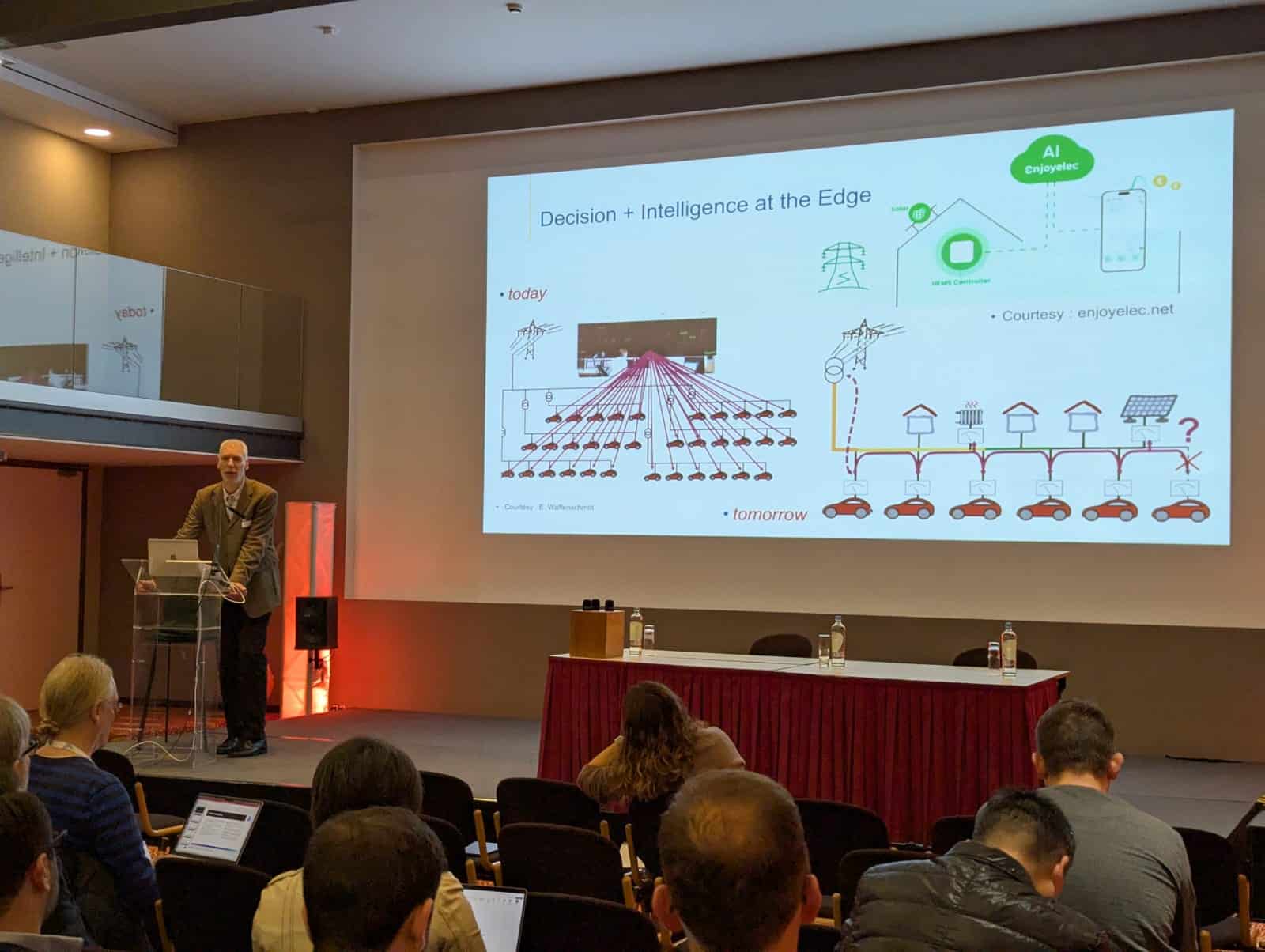
Opening remarks from Rolf Riemenschneider, Head of Sector for IoT at the European Commission, framed decentralised intelligence as a strategic priority for Europe’s technological autonomy. Coordinators of the five organising projects expanded on this vision, emphasising how distributed intelligence, open architectures, and trustworthy collaboration across the computing continuum are becoming foundational to Europe’s digital transformation.
Workshop Highlights
The workshop opened by grounding participants in the foundational principles of swarm intelligence (i.e. autonomous collaboration, distributed decision-making, emergent behaviour, and edge-orchestrated control) before moving into sector-focused sessions showing how these capabilities already translate into real-world impact across manufacturing, mobility, healthcare, and energy systems. Speakers demonstrated how decentralised architectures enhance resilience, responsiveness, and operational efficiency, while industrial and research success stories highlighted maturing open-source toolchains, validated multi-agent protocols, and emerging pathways that bridge scientific advances with market deployments. Complementing these themes, sessions dedicated to AI and distributed intelligence explored advances in federated learning, edge inference, and early generative-AI applications, underscoring the accelerating convergence between distributed AI and Europe’s computing continuum.
P2CODE Contributions: Advancing Secure, Interoperable Swarms
Beyond its demos, P2CODE delivered several high-impact presentations that underlined its leadership in secure orchestration, distributed trust, and applied swarm intelligence.
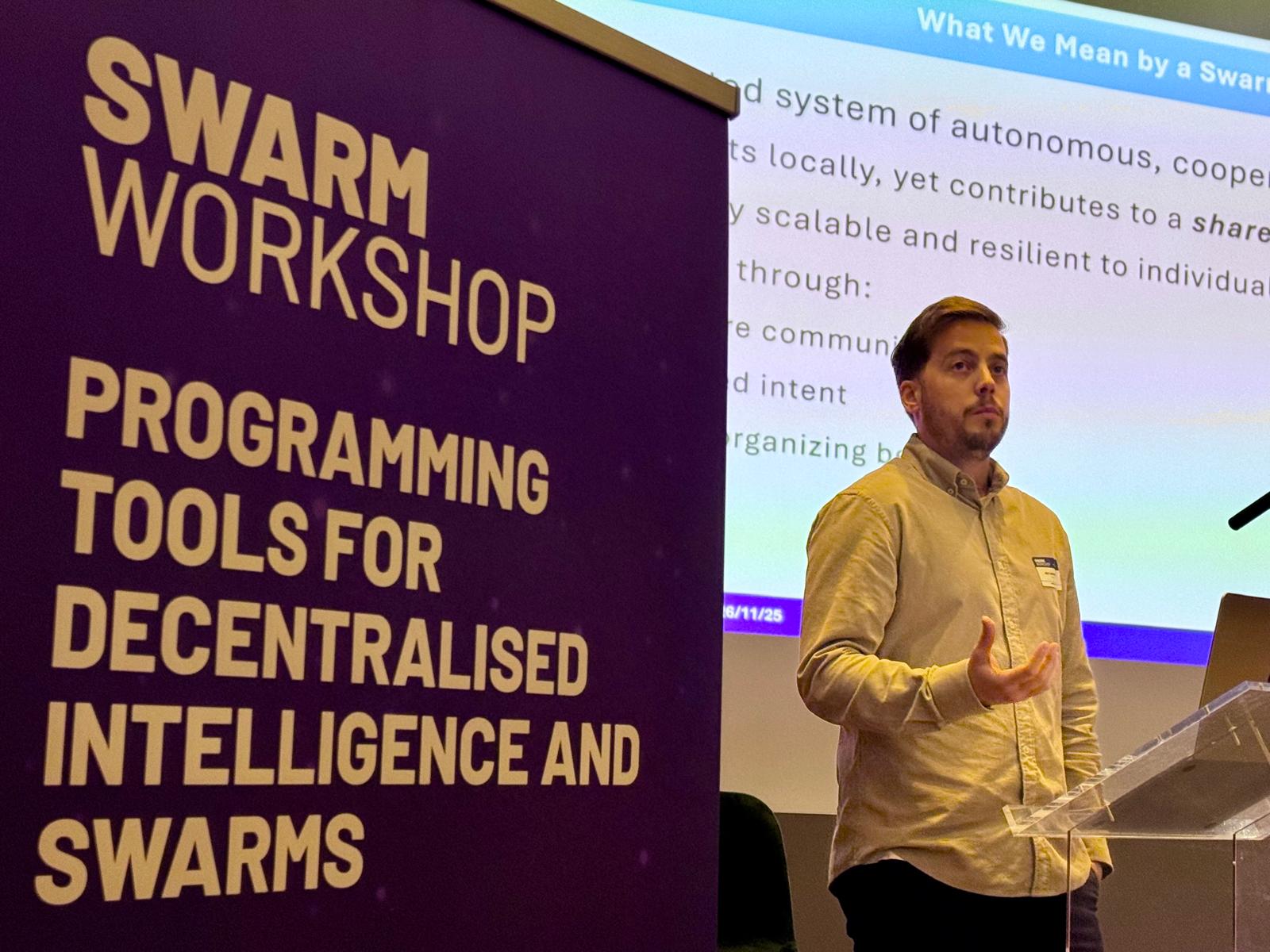
Understanding Swarm Intelligence at the Edge
Nikos Psaromanolakis (UBITECH) opened the technical programme by describing P2CODE’s approach to secure, orchestrated multi-agent systems, powered by zero-touch automation, trust verification, adaptive workload placement, and open interfaces. His talk established the conceptual baseline for the workshop’s subsequent technical discussions.
Securing Intelligence in Highly Distributed Systems
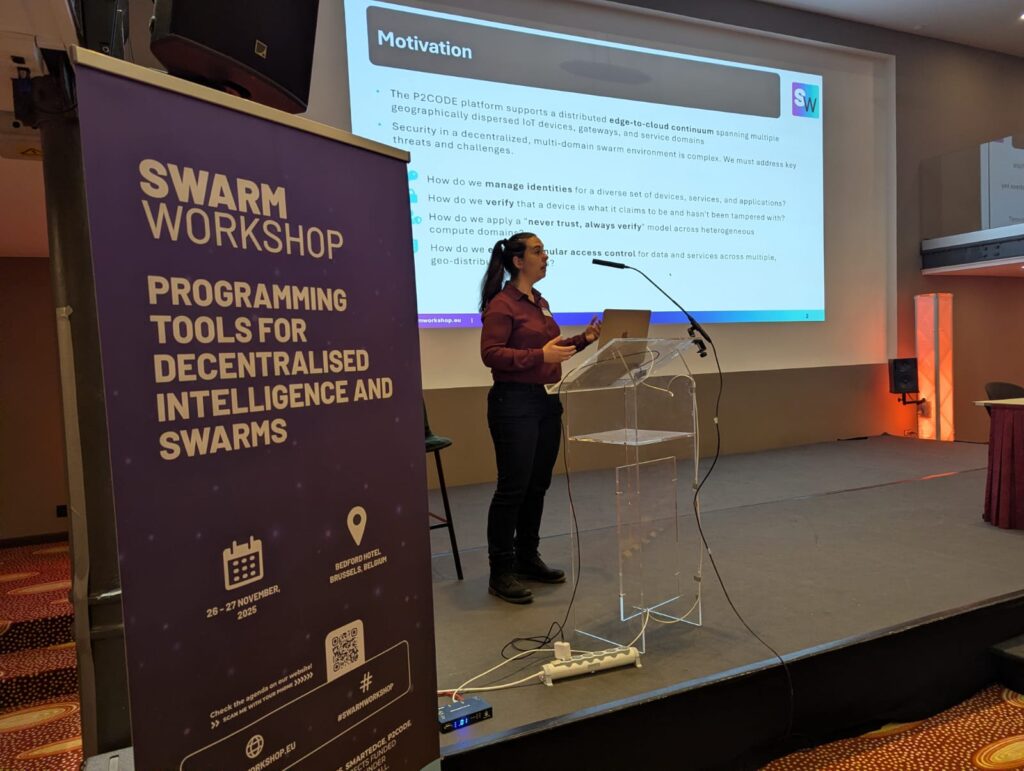
Presenter: Samira Briongos Herrero (NEC Laboratories Europe)
Samira introduced P2CODE’s Security & Trust Layer, featuring decentralised identity, verifiable credentials, hardware and software attestation, data provenance tracing, ML-based anomaly detection, and Zero-Trust service access. Her presentation illustrated how P2CODE enables secure autonomous swarms across heterogeneous and dynamic environments.
Environmental & Infrastructure Monitoring Across the Cluster
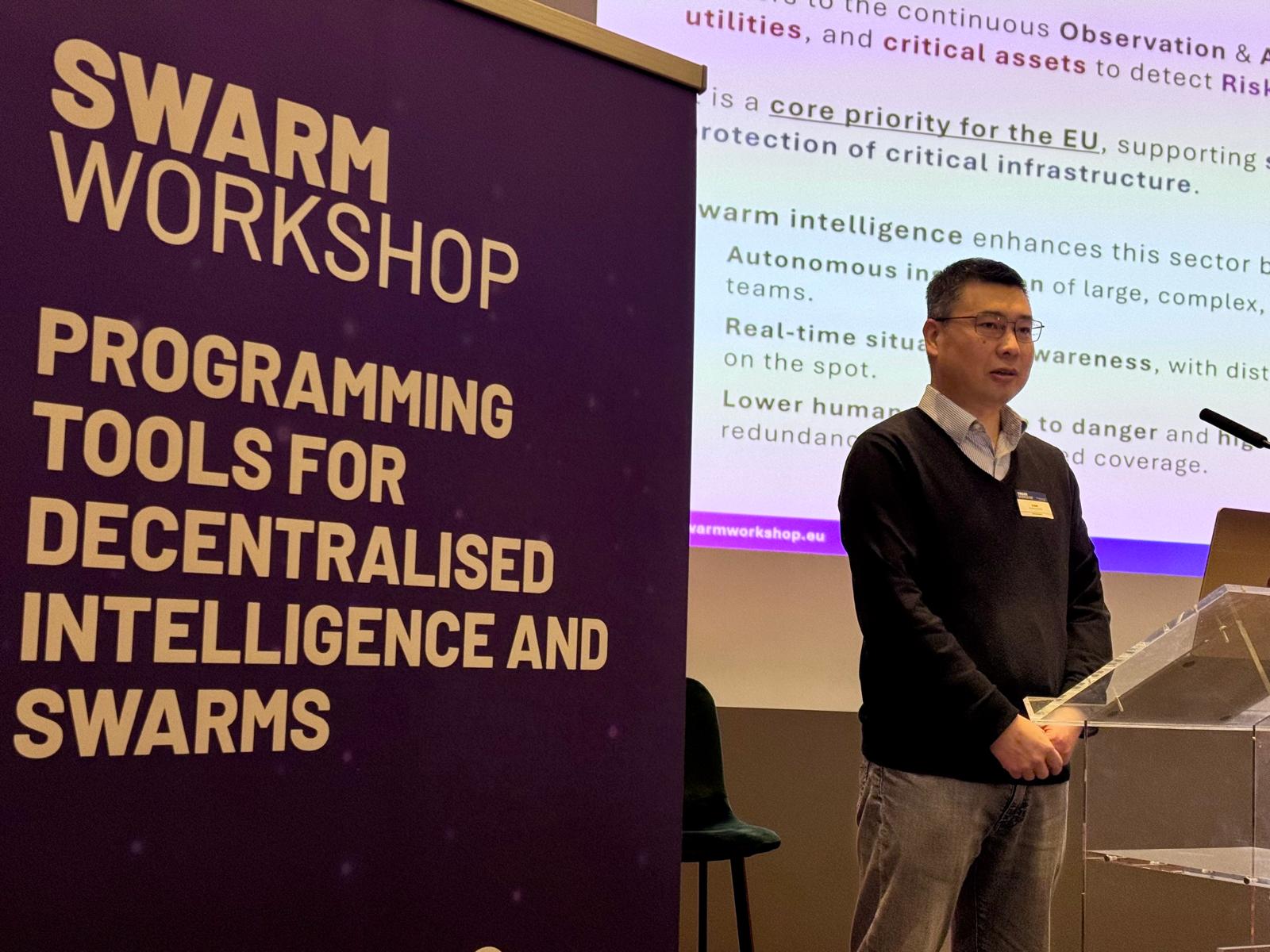
Presenter: Qi Wang (University of Leicester)
In the session on sector-specific architectures, Qi Wang contextualised P2CODE’s work within the broader cluster, presenting PPDR-focused cloud-to-edge coordination for emergency response while connecting it with:
- OASEES’s distributed sensing for structural safety
- TaRDIS’s privacy-preserving learning architectures for smart homes, and
- OpenSwarm’s UAV swarm missions for forest mapping and ocean noise monitoring.
Open Standards for Secure IoT–Edge–Core Orchestration
Presenter: Nikos Psaromanolakis (UBITECH)
Nikos detailed P2CODE’s active engagement with ETSI, TM Forum, AIOTI, and BDVA, showing how the project contributes practical inputs on secure identity, resource attestation, and cloud-native orchestration. His talk emphasised the importance of vendor-neutral, interoperable, and sovereign European edge systems, marking P2CODE as a key player in shaping Europe’s standards landscape.
This cross-project perspective showcased the synergies emerging across the Horizon Europe Swarm Computing Cluster.
Success Stories Session
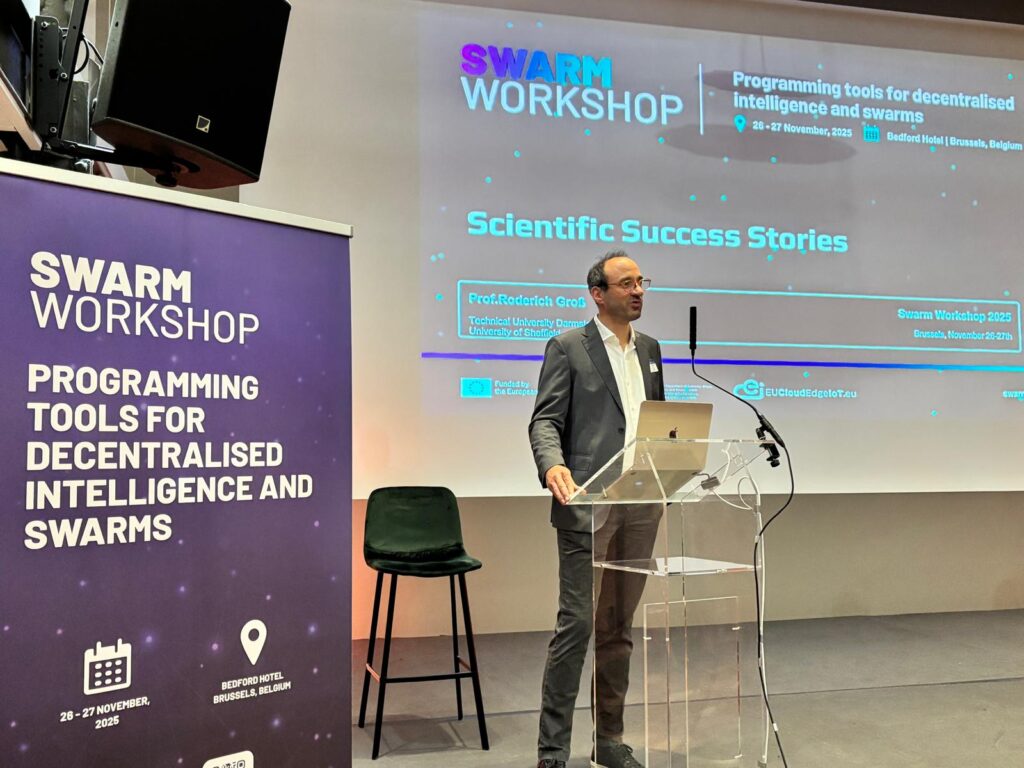
Chair: John Avramidis (UniSystems), P2CODE Project Coordinator
John chaired a dedicated session highlighting scientific breakthroughs, community building, and early exploitation pathways across all swarm projects. The session reinforced how the cluster is not only advancing distributed intelligence research, but also steering it toward innovation-ready outcomes.
Demo Exhibition: Showcasing Applications of the Swarm Project Cluster
Across the demo floor, participants engaged with a diverse portfolio of swarm-enabled systems spanning edge-AI sensing, autonomous robotics, resilient industrial operations, environmental intelligence, sovereign data exchange, energy-aware communities, and even satellite-scale coordination. The demonstrations showed how swarms can connect drones, robots, vehicles, sensors, and edge devices to enable real-time analytics, optimise workflows and energy flows, enhance worker and public safety, modernise critical infrastructure inspection, and support trustworthy data-driven services. Covering domains from manufacturing and mobility to healthcare, smart cities, emergency response, and renewable energy, the exhibition highlighted both the versatility and the growing operational readiness of Europe’s decentralised intelligence landscape.
P2CODE Demo Booth: Swarms Supporting Safety, Emergency Response & Critical Infrastructure
Smart Logistics & Industrial Safety in Action
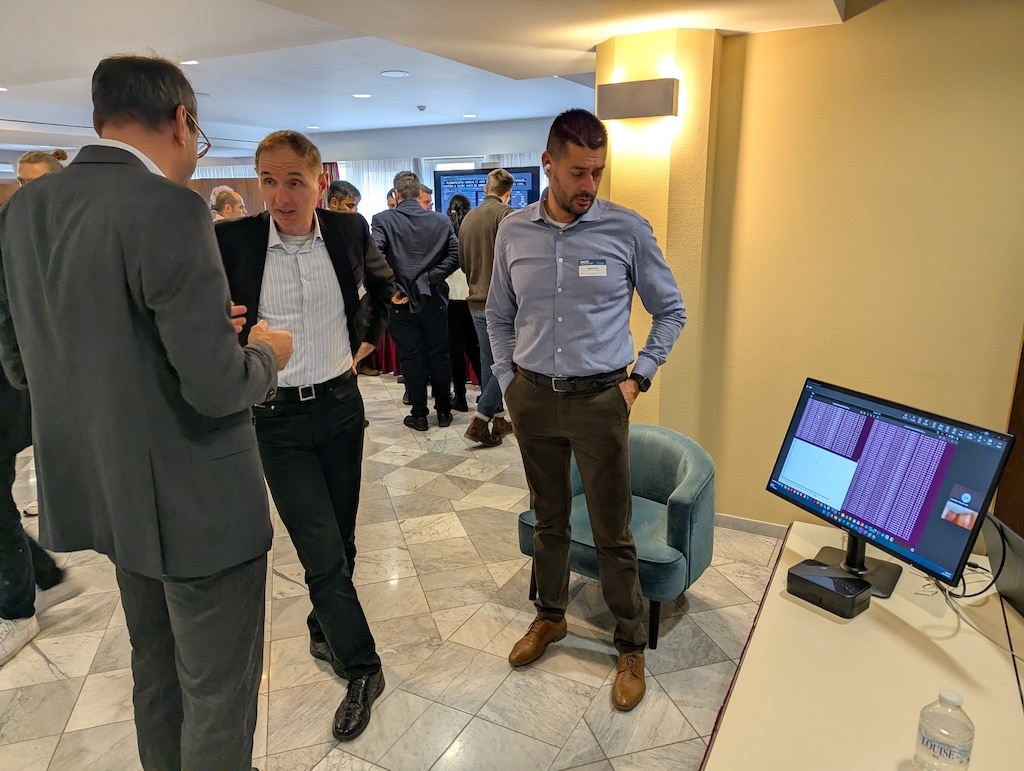
Lead: iLINK, Greece
This demo reconstructed a smart warehouse where forklifts, workers, and IoT devices collaborate as a coordinated swarm. Using P2CODE’s edge intelligence and computer vision, the system enables real-time positioning and collision avoidance, detects safety risks, automates tasks, and continuously optimises cargo handling and workflows. The result is a safer, more efficient industrial environment where human–robot collaboration is enhanced by distributed intelligence.
Autonomous Search and Surveillance for Emergency Missions (PPDR)
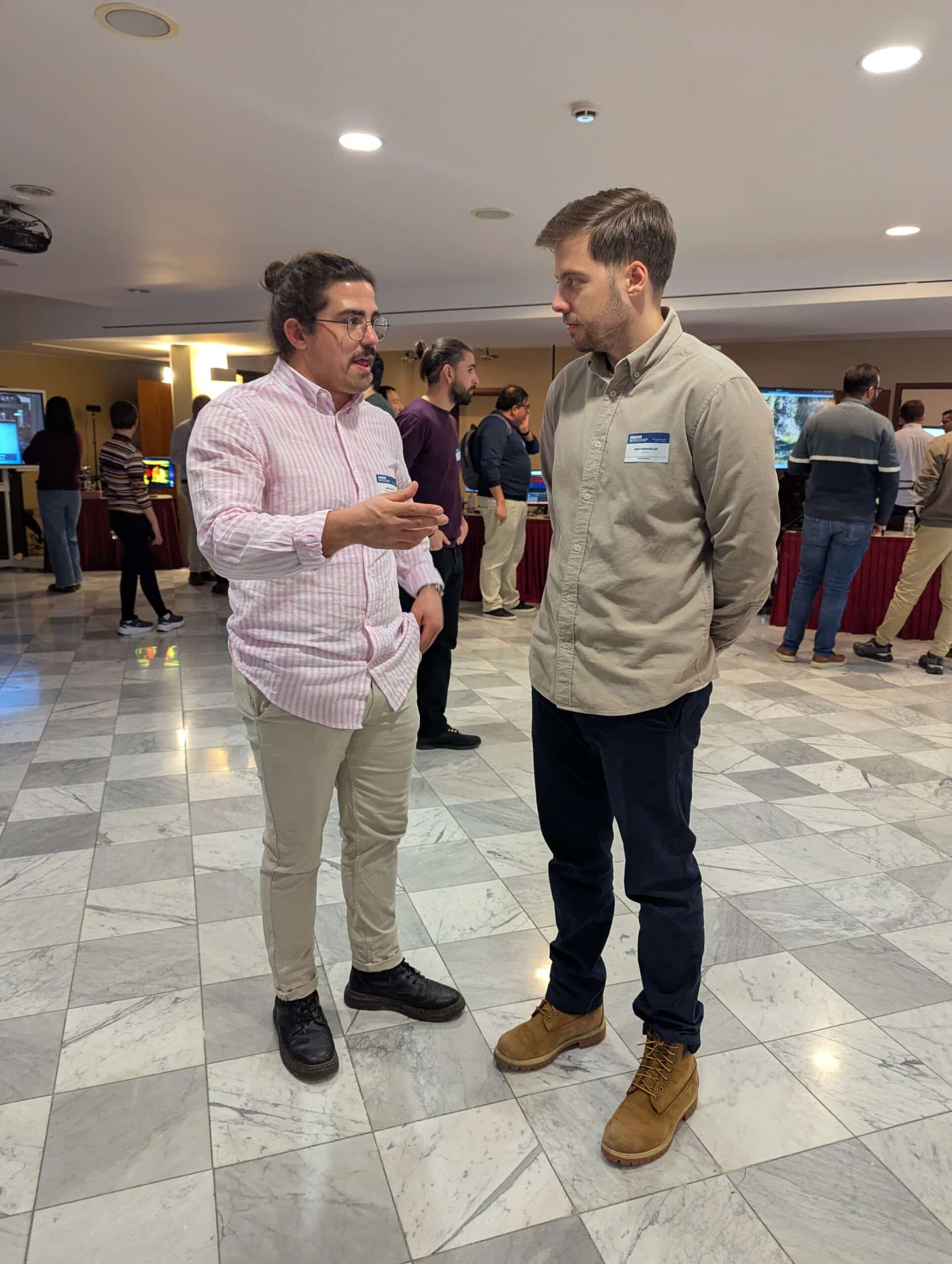
Lead: University of the West of Scotland (UWS), UK
This emergency-response scenario demonstrated how UAVs and ground robots can operate as an adaptive search-and-surveillance swarm. Powered by P2CODE’s secure orchestration, the agents explore an area, detect people, share situational intelligence, and adjust their coverage dynamically, even under degraded network conditions. The demo highlighted P2CODE’s ability to support rapid deployment, mission continuity, and real-time decision-making in time-critical contexts.
AI-Enabled Monitoring & Security for High-Voltage Substations
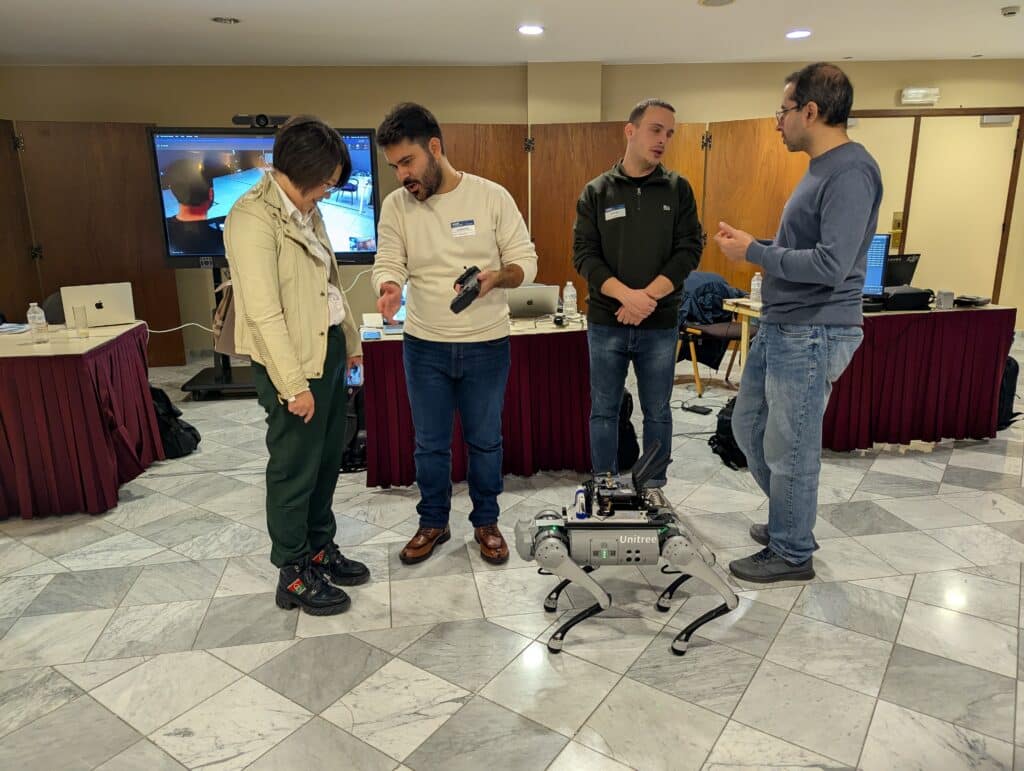
Lead: IPTO (Independent Power Transmission Operator), Greece
The AA2 demo showcased P2CODE’s contribution to modernising and securing critical energy infrastructure. Two tightly integrated use cases demonstrated:
- Predictive maintenance using PMUs, legacy sensors, and LSTM-based anomaly detection
- Physical security via AI video analytics, UAV support, and adaptive offloading strategies
Together, they showed how P2CODE enables intelligent, resource-aware analytics in environments where reliability, continuity, and safety are essential.
A Community Ready for Deployment
The workshop revealed a research ecosystem rapidly shifting from exploratory experimentation to operational readiness. With its emphasis on trust, security, interoperability, and end-to-end orchestration, P2CODE showcased its contributions to shaping Europe’s next generation of distributed intelligent systems. The event made clear that decentralised intelligence is no longer a future concept. It is becoming a practical foundation for Europe’s digital autonomy.